

Can I sew Camo Polar Fleece easily?
As a supplier of Camo Polar Fleece, I often get asked by customers whether it's easy to sew this type of fabric. In this blog post, I'll share some insights based on my experience in the industry to help you understand the process better.
Understanding Camo Polar Fleece
Camo Polar Fleece, or Camouflage Polar Fleece Fabric, is a popular choice for a variety of projects. It combines the functionality of polar fleece, which is known for its softness, warmth, and lightweight nature, with a camouflage pattern that adds a unique aesthetic. This fabric is commonly used in outdoor clothing, blankets, and even pet products.
One of the key characteristics of Camo Polar Fleece is its stretchability. Unlike some other fabrics, it has a certain degree of give, which can make it both an advantage and a challenge when it comes to sewing. On one hand, the stretch allows for a more comfortable fit in clothing items. On the other hand, it requires a bit more attention during the sewing process to ensure accurate seams.
Preparation Before Sewing
Before you start sewing Camo Polar Fleece, it's important to make some preparations. First, you need to choose the right needle. A ballpoint needle is recommended because it can easily glide through the fabric without catching or snagging the fibers. The size of the needle depends on the thickness of the fleece. For most standard Camo Polar Fleece, a size 70/10 or 80/12 needle should work well.
Next, select the appropriate thread. A polyester or cotton-polyester blend thread is a good choice as it has enough strength to hold the seams together. Make sure the thread color matches the fabric or complements the camouflage pattern.
It's also a good idea to pre-wash the fabric. This helps to remove any chemicals or finishes that may be on the fabric and can prevent shrinkage after the item is sewn. When washing, use a gentle cycle and cold water, and avoid using fabric softeners as they can leave a residue on the fleece.
Cutting the Fabric
Cutting Camo Polar Fleece requires a sharp pair of scissors or a rotary cutter. Since the fleece has a tendency to fray, it's important to cut the fabric as cleanly as possible. You can use a cutting mat and a ruler to ensure straight lines. If you're using a pattern, make sure to pin it securely to the fabric. It's advisable to cut a bit more than the pattern size to allow for seam allowances.
When cutting, be aware of the direction of the fleece. Fleece has a nap, which means the fibers lie in one direction. Cutting against the nap can give the fabric a different appearance, so it's best to cut all pieces in the same direction to maintain a consistent look.
Sewing Techniques
Now, let's talk about the actual sewing process. When sewing Camo Polar Fleece, it's important to use a slow and steady pace. Start with a test seam on a scrap piece of the fabric to adjust the tension and stitch length. A medium stitch length, around 2.5 to 3 mm, is usually appropriate.
To prevent the fabric from stretching out of shape while sewing, you can use clips instead of pins. Pins can leave holes in the fleece and may cause the fabric to stretch around the holes. Clips hold the fabric in place without damaging it.
For straight seams, you can use a regular straight stitch. However, for curves or areas that require more flexibility, a zigzag stitch or a stretch stitch may be more suitable. A zigzag stitch can stretch with the fabric and prevent the seams from breaking when the item is worn or used.
When sewing corners, make sure to pivot carefully. Stop sewing a few stitches before the corner, lift the presser foot, turn the fabric, and then continue sewing. This helps to create clean and sharp corners.
Finishing the Seams
Since Camo Polar Fleece has a tendency to fray, you need to finish the seams to prevent the edges from unraveling. One way to do this is by using a serger. A serger can trim the edges and sew a finished seam in one step, giving a professional look. If you don't have a serger, you can also use a zigzag stitch to finish the edges. Simply sew a narrow zigzag stitch along the raw edge of the fabric.

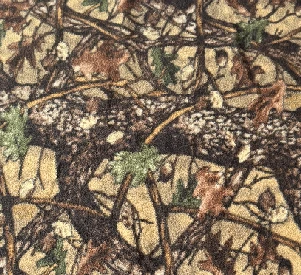
Another option is to use bias binding. Bias binding can be applied to the edges of the fabric to give a neat and finished look. It also helps to prevent fraying and adds a decorative touch.
Challenges and Solutions
One of the common challenges when sewing Camo Polar Fleece is the fabric shifting during sewing. This can happen because of the stretch and the smooth surface of the fleece. To solve this problem, you can use a walking foot on your sewing machine. A walking foot feeds the fabric evenly from the top and bottom, reducing the chances of shifting.
Another challenge is the accumulation of lint in the sewing machine. Fleece generates a lot of lint, which can clog the machine and affect its performance. To prevent this, clean the machine regularly during the sewing process. You can use a small brush to remove the lint from the bobbin area and the feed dogs.
Other Related Fabrics
In addition to Camo Polar Fleece, there are other interesting fabrics that you might want to explore. For example, Waterweed Floral Fabric offers a unique floral pattern that can be used for a variety of creative projects. It has different characteristics compared to Camo Polar Fleece, but the basic sewing principles are similar.
Maple Leaf Pattern Polar Fleece is another option. It combines the warmth and softness of polar fleece with a beautiful maple leaf pattern, making it a great choice for fall-themed projects.
Conclusion
In conclusion, sewing Camo Polar Fleece is not extremely difficult, but it does require some attention to detail. With the right preparation, tools, and techniques, you can create high-quality items using this fabric. Whether you're a beginner or an experienced sewer, Camo Polar Fleece offers a lot of possibilities for creative projects.
If you're interested in purchasing Camo Polar Fleece or any of our other fabrics, we invite you to contact us for a purchase negotiation. We have a wide range of colors, patterns, and thicknesses to meet your needs. Our team is always ready to provide you with professional advice and support.
References
- Textile Technology Handbook, various authors
- Sewing for Beginners: A Comprehensive Guide, Jane Smith