
What is Fiber Camouflage Cloth
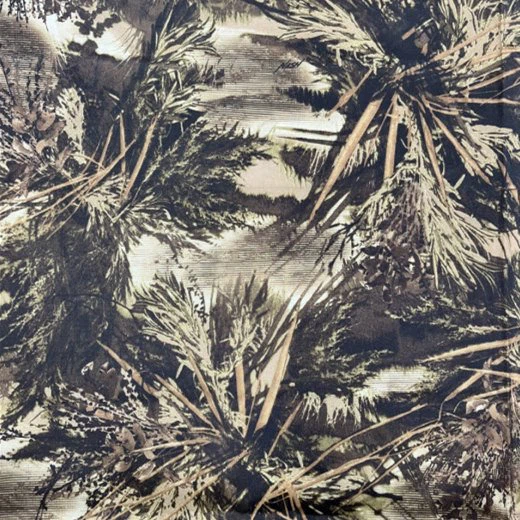
Camouflage Carbon Fiber/Aramid is a fabric that has been produced using beautiful Toray T-300 carbon fiber but has been woven in a special loom to create this amazing and unique pattern.
Benefits of Fiber Camouflage Cloth
Strong waterproofness
Due to the use of polymer composite materials, fiber camouflage cloth has good waterproof properties. This makes this camouflage cloth widely used in the shelter and maintenance of waterproof places such as outdoor swimming pools and beach umbrellas. In addition, since this fabric also has good wear resistance and can effectively resist air pollution and solar radiation, it is also often used in car sunshade, transportation facilities, advertising displays, etc.
Anti-insect and anti-corrosion
Fiber camouflage cloth is made of inorganic fibers and organic fibers entangled, woven and compounded. The fiber density is relatively high, which can not only resist daily dirt, but also effectively prevent insects and mildew. Therefore, it is widely used in home soft furnishings, clothing, shoes and hats and other occasions.
Strong air tightness
Although it has excellent waterproof performance, air tightness has also become its disadvantage. In the hot summer, outdoor tents made of fiber cloth will cause air stagnation, resulting in excessive internal temperature and affecting the use effect. Therefore, when choosing fiber cloth products, their breathability should be fully considered.
Susceptible to pollution
Since there is no natural anti-fouling layer on the surface of the fiber cloth, the material itself has strong water absorption and is easily contaminated with dust and stains, thus shortening its service life. In daily use, attention should be paid to the cleaning and maintenance of fiber camouflage cloth products.
-

Waterproof Camo Canvas Fabric
DESIGN: KAMISH. COMPOSITION: 100% POLY, Camo Alova Fabric. WIDTH: 150CM . WEIGHT: 170GSM Add to Inquiry -
Desert Camo Fabric
DESIGN: KAMISH. COMPOSITION: 100% POLY, Camo Alova Fabric. WIDTH: 150CM . WEIGHT: 170GSM Add to Inquiry -
Waterproof Fiber Camouflage Cloth
COL: 201503. COMPOSITION: 100% POLY, Bonding Fabric. WIDTH: 150CM . WEIGHT: 240GSM Add to Inquiry -
Camouflage Carbon Fiber Aramid Hybrid
COL: 201914. COMPOSITION: 100% POLY, Waterfowl Camo Fabric, Bonding Fabric. WIDTH: 150CM . WEIGHT: 240GSM Add to Inquiry -
Camo Carbon Fiber Fabric
COL: BROWN. COMPOSITION: 100% POLY, Microfiber. WIDTH: 150CM . WEIGHT: 130GSM Add to Inquiry -
Camouflage Carbon Fiber Cloth
COL: BROWN. COMPOSITION: 100% POLY, Microfiber. WIDTH: 150CM . WEIGHT: 130GSM Add to Inquiry -
Carbon Fiber Mixed Cloth
COL: KHAKI. COMPOSITION: 100% POLY, Taslan. WIDTH: 150CM . WEIGHT: 120GSM Add to Inquiry -
Military Camouflage Soft Shell Fabric
DESIGN: MM-14. COMPOSITION: 95% POLY, 5% SPANDEX, Camo Stretch Fabric. WIDTH: 150CM . WEIGHT: 300GSM Add to Inquiry


Why Choose Us
Fast delivery
Strong production capacity, Complete packaging ensures product quality and is shipped to the destination in the first time.
Professional team
We have a team of skilled and experienced professionals who are well-versed in the latest technology and industry standards. Our team is dedicated to ensuring that our customers get the best service and support possible.
Competitive prices
We offer our products at competitive prices, making them affordable for our customers. We believe that high-quality products should not come at a premium, and we strive to make our products accessible to all.
Rich experience
Has a long-standing reputation in the industry, which makes it stand out from its competitors. With over many years of experience, they have developed the skills necessary to meet their clients' needs.
Efficient and convenient
The company has established marketing networks around the world to provide high-quality services to customers in an efficient and convenient manner.
Quality assurance
In terms of quality assurance, the company strictly follows the standards and norms of the industry quality system. Adopt industry-leading testing equipment to ensure product quality and good reputation.
Classification of Fiber Camouflage Cloth
Land camouflage cloth
Mainly used for camouflage in land environments. Different land camouflage cloths use different color combinations according to different terrains and vegetation.
Ocean camouflage cloth
Mainly used in naval operations such as ships, and mostly uses water color combinations such as blue and green for camouflage.
Desert camouflage cloth
Suitable for desert terrain camouflage, mainly using yellow, brown, green and other color combinations.
Snow camouflage cloth
Mainly used in snow, ice and other environments, using white, gray, green and other color combinations for camouflage.
Future Trends in Fiber Camouflage Cloth
Camouflage plays a passive role in the requirements of secrecy and deception. Nanotechnology is expected to play an important role in the future development of fabric camouflage systems. Modern technological advances have enabled scientists, engineers and researchers to modify the properties of substrates and surfaces at the molecular level, which has the advantage of controlling certain properties of materials and surfaces. There has been a lot of research into textiles with electrochromic properties, which change color through electrical stimulation. Early camouflage fabrics were mainly made of thick cotton twill. This heavy fabric was very durable, but it was hot to wear and became heavier when wet. The fabrics were made of synthetic fibers, but they were unable to wick sweat. A more effective solution was to blend cotton and synthetic fibers, which would produce a stronger fabric without adding weight. Nylon and cotton blends are very common in military uniforms. The latest development in camouflage fabrics is natural raised fabrics, which are particularly used for special hunting purposes. Camouflage fabrics will play a greater role and application in military use in the future.
Application of Fiber Camouflage Cloth
Uniforms
The role of uniform is not only to hide and protect each soldier, but also to identify friend from enemy. Camouflage uniforms need to be manufactured and distributed to a large number of soldiers. To design the camouflage uniforms, involves a trade-off between camouflaging effect, recognizability, cost, and manufacturability.
Armies doing service in different theatres may require different camouflage uniforms. The issues of temperate/jungle and desert camouflage uniforms are common. Patterns can to some extent be adopted to different landscape by adding means of fastening pieces of vegetation to the uniform. Helmets often have netting covers, whereas some jackets have small loops for the same purpose. Therefore being able to find suitable camouflage vegetation or in other ways modify the issued battle uniform to suit the local terrain is an important skill for infantry soldiers.
Tents
Tents are manufactured in military that can give protection in extreme cold weather. The tent is stitched with a rubberized sheet at the base level to protect against dampness. It has olive green color on one side and white on the other side. Hence, it serves as the objective of camouflaging in different situations. Here the camouflage fabric comes in picture and utilized. The main reason to use camouflage fabrics to make tents is that it merge in nature and can’t be identified by enemy.
Ballistic protection
It is very important for the soldiers to protect them from bullets and other projectiles like sharpnels, metal fragments and flying debris of various sizes, shapes and velocity. Textile body armours may give protection against this. Development in the production of high strength fibers has been in very rapid pace. Currently ballistic protection is offered by aromatic polyamide fibers, fibers such as Kevlar, Twaron which are available in a wide range of decitexes and finishes. A range of ultra high modules polyethylene (UHMPE) fibers have been developed for this purpose. They are typically Dyneema and Spectra fibers. Camouflage fabric is used for this purpose.
Military backpack
A military backpack, is also called a MOLLE (Modular Lightweight Load Carrying Equipment), is specifically designed to adjust the amount of equipment a soldier carries. The contents of a MOLLE are similar to what a backpacker would carry but they differ according to the location of the soldier, the length of the assignment and the soldier’s mission.
Tarpaulin
Camouflage tarps offer various advantages. It is very easy to install, they provide effective protection against bad weather and prying eyes. Their uses are similar to those of military nets, but they are very specific in their characteristics. The camouflage military tarpaulin is specifically made from materials that dry very quickly, which allows it to be stored quickly when it is needed. The camouflage cover is light in nature and not bulky. It can be easily attached to any type of support, specifically natural or designed for this purpose. The tarpaulins are designed to be strong and resistant in nature, for military purpose so that can be protected safely.
Process OfFiber Camouflage Cloth
Material selection is a very critical step in the camouflage fabric process. Generally speaking, the material selection of camouflage fabric requires high fabric density and fine texture for subsequent dyeing and printing processes. Cotton, polyester and other materials are usually used to make camouflage fabric.
Dyeing is an important step in the camouflage fabric process. The colors of camouflage patterns generally include green, brown and black, so multiple dyeing processes are required. Before dyeing, the selected fabrics must be pretreated, including impregnation, bleaching and other steps to ensure the effect and quality of subsequent dyeing.
Printing is another key step in the production of camouflage fabric. Printing is to print different colors of ink on the fabric through a template to form a camouflage pattern. Screen printing is usually used for the printing process of camouflage fabric, which requires the production of precise printing templates and precise printing processes.
Post-processing is the last step in the camouflage fabric process. Through post-processing, the camouflage pattern can be fixed to prevent it from fading and deformation. Usually the post-processing process includes drying, drying, shaping and other links to ensure the quality and stability of the camouflage cloth.
The camouflage cloth process is a complex and delicate process that requires careful production and processing in multiple links. Only by strictly implementing the process can high-quality camouflage cloth be produced. Camouflage cloth not only has important application value in the military field, but is also widely used in outdoor products and fashion fields. Therefore, the refinement and standardization of its process is crucial.
Fiber Camouflage Cloth Market Size
Fiber camouflage refers to clothing designed with patterns that mimic the natural environment, allowing the wearer to effectively blend into the environment. These patterns often contain various colors and shapes found in nature, such as leaves, branches, and rocks, to create visual interference, thereby camouflaging the wearer. The purpose of fiber camouflage is to provide concealment and improve the wearer's ability to remain undetected by potential threats, whether in hunting, military operations, or outdoor recreational activities. As technology advances, camouflage designs have become more complex, combining digital patterns and infrared blocking materials to enhance stealth capabilities. The camouflage clothing market covers a variety of products, including jackets, pants, shirts, hats, and accessories, which meet different consumer needs in different industries.


The fiber camouflage market is rich in opportunities and driven by various factors, such as the increasing demand for tactical equipment and uniforms by military and law enforcement agencies around the world. In addition, the growing popularity of outdoor activities such as hunting, fishing, and hiking among enthusiasts has also promoted the expansion of the market. In addition, fashion trends often influence consumer preferences, and camouflage patterns are popular not only for their functional advantages, but also for their aesthetic appeal in urban streetwear and casual wear. Additionally, advances in textile technology and manufacturing processes continue to drive innovation in camouflage clothing, resulting in lighter, more durable, and more environmentally friendly products. Market segments can be categorized based on end-user, including military and law enforcement, outdoor enthusiasts, fashion and lifestyle, and hunting and shooting sports. Each segment offers unique opportunities for manufacturers and retailers to tailor their products and marketing strategies to meet the specific needs and preferences of their target audience, thereby maximizing market penetration and revenue growth.
Fiber Camouflage Cloth Precautions
Fiber camouflage cloth is a kind of cloth used for outdoor activities and operations, usually made of polyester fiber. The following points need to be noted when using camouflage cloth:
Washing before use
Fiber camouflage cloth may have residual dyes or chemicals during the manufacturing process, and needs to be carefully cleaned before use to avoid adverse effects on the skin or the environment.
Sun protection
Fiber camouflage cloth is easy to fade and age in the sun, so it is necessary to avoid long-term exposure to the sun, or use a special sunscreen spray to protect it.
Pay attention to cleaning
Fiber camouflage cloth is easy to be stained with dirt such as mud and dust when used in the wild, and needs to be cleaned in time to avoid inconvenience or impact on use.
Pay attention to color protection
The color of fiber camouflage cloth is easy to fade and discolor, avoid soaking in water for a long time or washing with other clothes to avoid affecting its color and quality.
Avoid contact with humid environment when using
Fiber camouflage cloth is sensitive to humid environment, and may cause mildew, deterioration and other problems when encountering humid environment, so it is necessary to avoid long-term contact with humid environment.
Our Factory
We are located in textile city Shaoxing-one of the largest textile collecting and distributing centers in Asia, with convenient transportation access.
Our company is a professional supplier of camouflage fabric for hunting, fishing, and outdoor. Since 2008, we have been producing and supplying fabric like bonded or coated, also uniform fabric. Our main products are dewspo fleece, softshell, alova, knitting, taslan, taffeta, oxford, TC greta, TC plain or twill, TC rip-stop, TC 110X76, TC 133X72, and many other poly/cotton fabric.


FAQ
We're professional fiber camouflage cloth manufacturers and suppliers in China, specialized in providing high quality products and service. We warmly welcome you to buy high-grade fiber camouflage cloth at competitive price from our factory.
Waterproof Fiber Camouflage Cloth, Camouflage Carbon Fiber Aramid Hybrid, Fiber Camouflage Cloth